You’ve almost completed designing your kitchen renovation, and the cabinets are beginning to get in your way. The illustration is a design for a wall of doors. A friend has gotten a drawer for all of his things. An acquaintance relies on a drawer for all of his things. Your pocketbook budget tells you, “take one, take one, take one.”
The kitchen drawer vs doors dilemma is one we see asked in every Melbourne renovation we’ve heard about, and it doesn’t have the same response for every cabinet. There are certain places where it’s obvious which styles go better. Some others rely on how you handle the cooking, who is using the kitchen, and what type of space.
The secret to figuring out how to fit your home!
Short Answer: Drawers are often better placed in base cabinets where you are going to pull utensils, pots, and pans. Often, doors are more practical with wall cabinets and tall units. Pantries can be either good or bad. The remaining factors should be determined by budget, layout, and the items you store.
The differences between kitchen drawers and doors and how they function
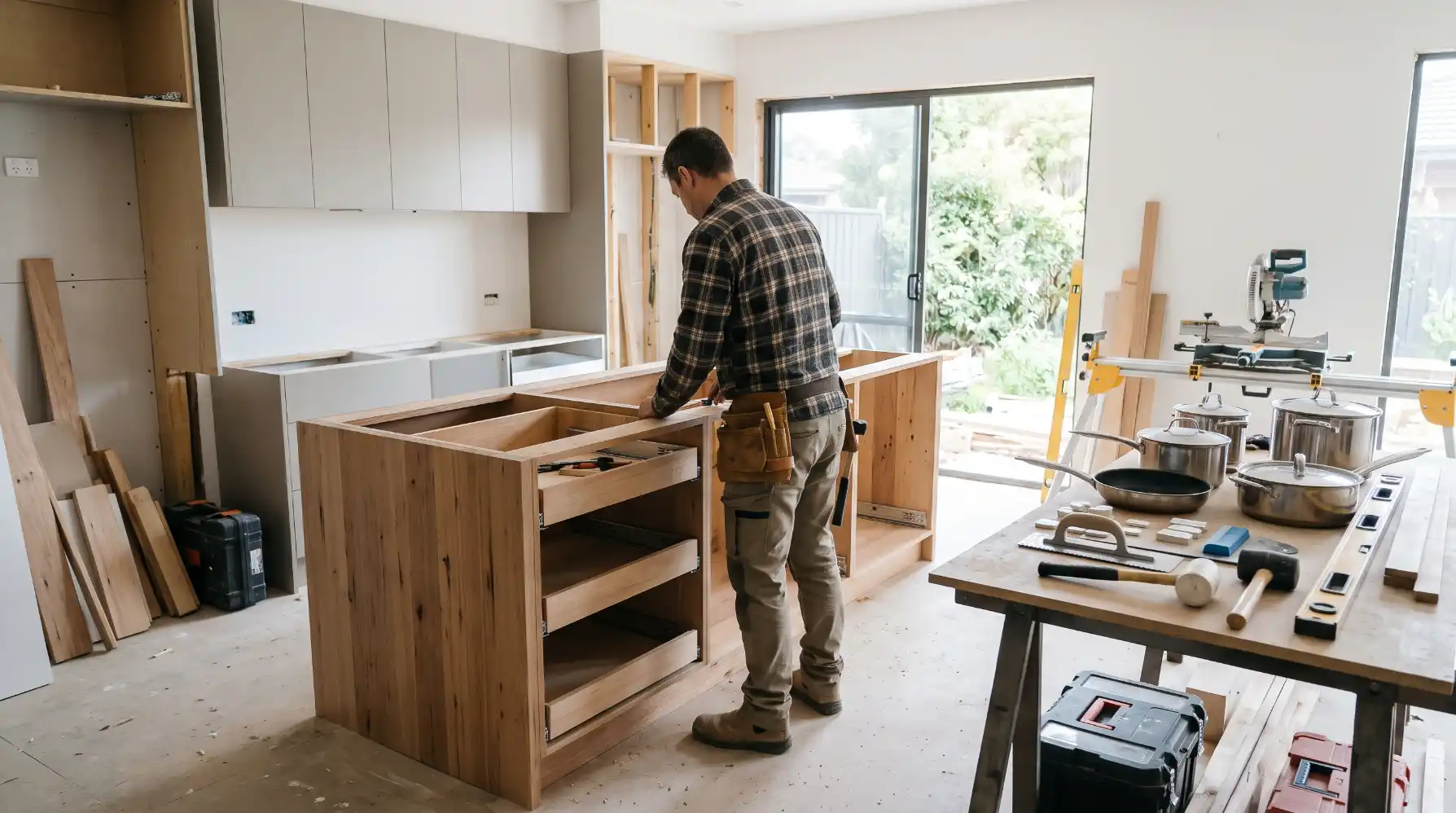
A drawer slides on runners, causing everything inside to move towards you. It enables you to view from above and gain access to what is at the rear without crouching, turning, or moving anything. Most of the usefulness of having a good pair of runners is that they allow the drawer to be pushed out all the way.
How doors work
A door fixed on hinges opens to an open space or a fixed shelf. Easy and customizable. Doors are good for very tall, awkward, or oversized items such as a stock pot, a mixer, or a stack of baking trays. You get what you have to pay for: depth! Items in the rear of a deep base cabinet are lost, and you have to get on your knees to look at them.
Choose Base, Wall & Pantry Cabinets for every decor!
Base cabinets
Here, any drawers are welcome. A three-drawer base unit allows a view into pots, utensils, and lids. This is easier on the back and knees, and is beneficial for older children and family members who are unable to comfortably crouch.
Under-sink and corner cabinets with a lazy Susan or blind-corner pull-out still function with doors that swing open and don’t need to be blocked by pipes and bins.
Wall cabinets
Doors win here. You can’t comfortably pull a drawer out above shoulder height, and you can’t see into it from below. A wall cabinet with doors is good for lighter materials such as glassware, serving platters, and extra appliances.
Pantry cabinets
Both can be incorporated into a pantry cabinet. Heavy cans and jars are accommodated by deep pull-out drawers. Articles featured on doors may have adjustable shelves and are good for cereal boxes or bulk products. It’s not always the type of shelf, but more often than not, it’s a type of shelving that makes a pantry function on an everyday basis.
What a Cabinet Maker Looks At
The difference for the practitioner is largely with construction.
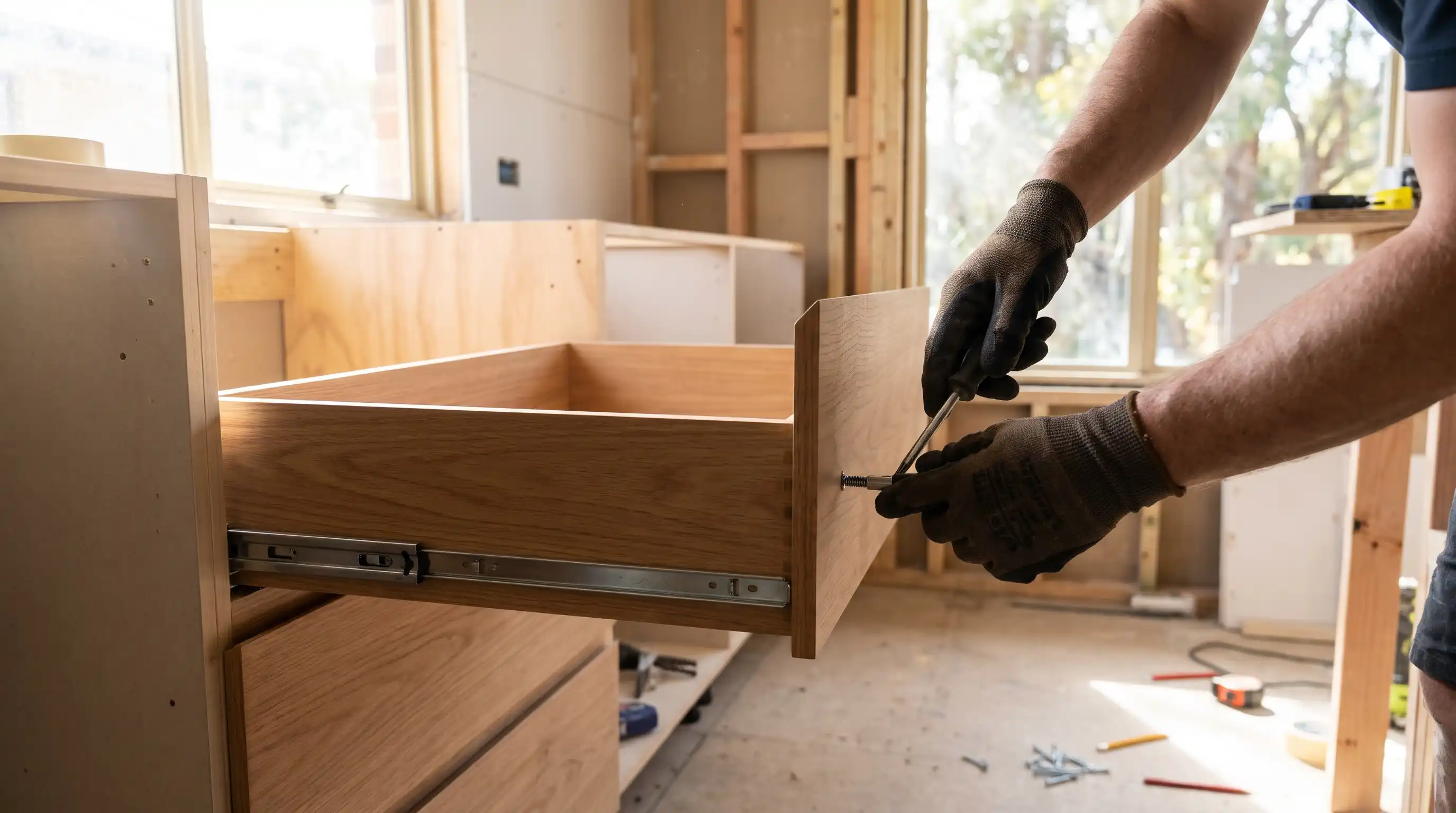
- Drawer boxes: These are individual boxes that need to be constructed, squared, and fitted in each drawer. A paneled door, hung on hinges, is known as a door.
- Runners: Drawers use runner hardware; runners are rated for a given load. A cheap, light-duty runner won’t last long if it’s used with a heavy pot.
- Hinges: The quality of hinges is important. Many prefer soft-close hinges and drawer runners as they prevent slamming and excessive wear and do not necessarily cost more.
- Carcass strength: In both cases, the cabinet frame must support the load, but it must support the load on the door, as well as on the loaded drawer.
This is why many cabinet makers typically charge more for drawer cabinets than door cabinets of equal width. Not only a different front, but more parts and more labor. Whether it’s worth the money depends on the cabinets you need to use every day. Our custom cabinets are built and fitted to suit how you cook.
Small Kitchens and Melbourne Homes
Imagine a very small galley kitchen in a 1960s brick house on Dandenong. The one run of base cabinets is hardly adequate, and there isn’t room enough to open the oven. Large doors open onto the walkway, preventing circulation. Drawers slide straight out and may require less space next to them, making the space cramped easier to manage.
Many of Melbourne’s older Victorian and Edwardian homes feature a narrow room and awkward corners. Custom cabinets allow you to utilize an area when using a traditional width may not be possible.
Think about a family that is renovating and is raising young children in south-east Melbourne. Plates and containers can be placed in low drawers, so that kids can reach them; a cabinet with a high door can house the sharp knives and cleaning products that should be out of their reach.
Moisture matters too. Near the kitchen sink and dishwasher, materials and hardware are important, considering steam and splashes. For these areas, ask your cabinet maker if the pieces used are moisture-resistant and the edges are sealed. If you’ve experienced trouble previously, our water-damaged kitchen cabinets repair guide spills the answers on what to be aware of and how we can help you.
Kitchen Drawers vs Doors at a Glance
| Factor | Drawers | Doors |
|---|---|---|
| Access | Full view from above, easy reach to the back. | Need to crouch or kneel to access deep shelves |
| Storage capacity | Works well for stacked, organized objects | Works well for tall or bulky objects |
| Cost | Usually more expensive (more pieces, more labor) | Usually less expensive (fewer pieces, less labor) |
| Durability | Depends on strength of runners and load resistance | Depends on the strength of the hinge |
| Best suited to | Base cabinets, pantry pull-outs | Wall cabinets, under-sink and tall cabinets |
Common mistakes in giving presentations
- All-door base cabinets. They conceal the clutter, and you dig at the back to get things.
- Drawers that are too shallow to accommodate pots. Don’t lock in drawer heights until you have measured the tallest pan and lid.
- Cheap runners. An open drawer is more of a hassle than a problem with a door sticking.
- Ignoring clearances. Handles, open doors, and open drawers can clash with appliances or opposite cabinets. Look at your plan for swing and pull-out space.
- Drawers everywhere. There are too many drawers that increase your cost and bulk at corners.
Consideration of cost and maintenance
Quality of the hardware is directly related to cost and longevity. Soft-close runners and Hinges can increase the cost but decrease slamming and wear. The heavy-duty runners will be more expensive and should be considered for pot drawers.
Cleaning and moisture also play a role. Promptly wipe up spills around the sink, keep the dishwasher gasket in good condition, and periodically run the dishwasher with cleaners and/or clean runners to prevent congealing grime. Refacing a damaged drawer front or damaged kitchen cabinet door may be available as one of the options, which you can read about in our guide to refacing kitchen cabinets in Melbourne, and our kitchen cabinet repairs guide outlines common repairs.
Filter out the choices of your cabinet design as well as the effect it will have on your tiling. The end of the toe-kick, the edges of the benchtop and the splashback heights should all be aligned prior to the tiler’s arrival at the site. It is often worth considering cabinet finishes in advance, and our guide to matching tile color with your cabinet finish explains how.